History of the Bordertown Series
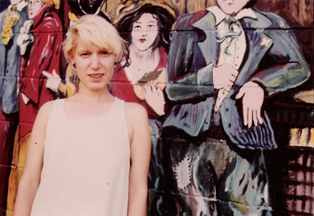
Terri Windling in the early days of Bordertown.
Photo by Beth Gwinn
Terri Windling created the Bordertown Series over 25 years ago while working as a young fantasy editor in the New York City of the 1980s (a scruffier, edgier, punkier New York City than the one today). In 1985, she was approached by the New American Library publishing company and asked to create a shared-world anthology for teenagers. (A shared-world book is comparable to a television series: the editor/producer creates the setting, premise and initial characters, then writers are invited into the project to write stories set in this "shared" milieu.)
Terri said yes to this interesting commission, and the setting she proposed was Bordertown: a modern city at the edge of a mysterious, magical realm. She envisioned a frontier, border city where runaway kids, both human and elfin, gathered to create new lives for themselves-sometimes successfully, sometimes disastrously-reminiscent of real-life teen meccas such as Haight-Ashbury in the 1960s. The publisher approved the concept, and allowed her to bring her then-editorial-partner, Mark Alan Arnold, on board to help with the first two books. (It was Mark who proposed asking an up-and-coming young Boston artist named Phil Hale to create the now-iconic cover art for Borderland and Bordertown.)
Terri then opened the doors of the city to some of the best young writers in the fantasy: Ellen Kushner, Midori Snyder, Charles de Lint, Will Shetterly and Emma Bull. Together they brought life, myth, music, and magic to the streets of Bordertown-creating its clubs and cafes; its initial characters, human and fey; and defining the strange, fluctuating rules of magic along the Border. Another fine young writer, Steven R. Boyett, joined the project at the eleventh hour when another author had to drop out suddenly due to health problems, contributing a story that's just a little different than the others, set in place that is somewhere halfway between a dystopian Los Angeles and Bordertown... but then, things are always odd and unpredictable on the Border. (Perhaps it is Bordertown, viewed through the eyes of a Californian teen determined to make the Border more familiar.)
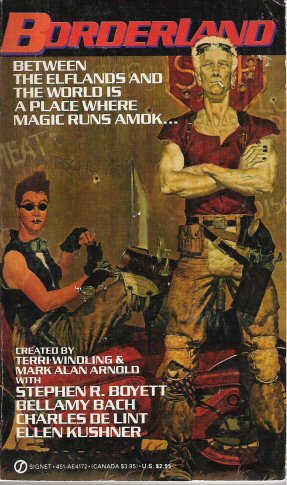
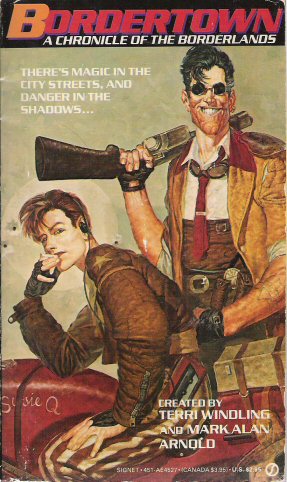
Those first two volumes, Borderland and Bordertown, then turned into a series of books and developed a loyal cult following, spawning chat boards, bands, dance parties, raves, and all manner of role playing games. As the book series progressed, all the original writers returned for more adventures on the Border, and other enthusiastic writers joined them there, including Steven Brust, Kara Dalkey, Patricia A. McKillip, Delia Sherman, and Ellen Steiber. Graphic artists who have journeyed to the Border over the years include Rick Berry, Thomas Canty, Dennis Nolan, Iain McCaig and Brian Froud—a fine roster indeed.
The last book of the original series, The Essential Bordertown (edited by Terri Windling & Delia Sherman), was published by Tor Books in 1996. And then? Book reviewer Michael M. Jones describes what happened next:
"And then, like anything really awesome, it stopped. Poof. Finito. Turn out the lights, stack the chairs, lock the doors, Bordertown was gone. The band broke up and everyone went on to solo careers, leaving behind nothing but fond memories, trashed hotel rooms, and possibly a few illegitimate kids. That was that...Until now. Thirteen years later, a new kind of Bordertown has appeared, much like one of those illegitimate kids growing up and coming to find their mysterious rock star daddy for the first time. And these kids have inherited a whole mess of the awesome gene from their wayward parents."
He's talking about Welcome to Bordertown: a brand new Bordertown anthology created and edited by Holly Black and Ellen Kushner (with Terri's blessing and aid), published by the YA division of Random House in May 2011. The anthology features new stories from the series' original writers (Charles, Emma, Will, Ellen, and Terri, missing only Midori, who helped out behind the scenes), alongside tales from a younger generation of writers who'd grown up with Bordertown, and contributions from long-time friends of the city.
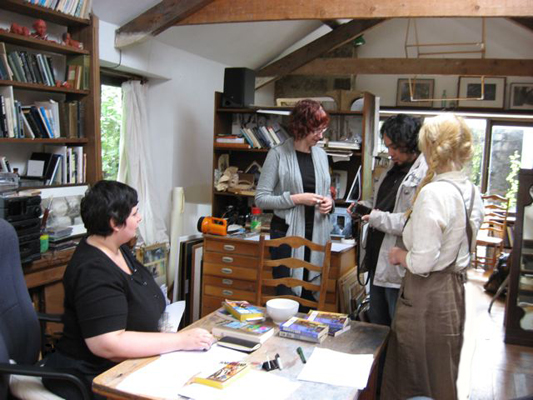
Co-editor Holly Black, Delia Sherman and web designer Theo Black
meet with Terri Windling at Bordertown Headquarters. Photo by Ellen Kushner
"Welcome To Bordertown is the next generation of the series," Michael Jones explains, "while simultaneously acting as the direct continuation of what has gone before. How's that? Simple. The Gates and Ways between Bordertown and the World closed. On the World side, it was a full thirteen years, just like it was for the readers. But for Bordertown and its residents, it was a mere thirteen days. A generation (or so) in the blink of an eye. The coming and going of a decade. The rise of iPods, the Internet, LOLcats, smartphones. An entire segment of the populace for whom Bordertown was just a fading myth, one of those things that may or may not have happened.
"And then the Ways opened, and everything changed. With traffic once again flowing between the worlds, with a whole new crop of runaways and fortune-seekers and opportunists and lost souls flooding into Bordertown looking for adventure and answers, and all the old hands forced to cope with years' worth of progress. But you know what? On the Border, the more things change, the more they stay the same...."
Yes, the Way to the Border is open once again. Welcome, or welcome back. And watch your step.